Welcome
I recently, in a moment of contemplation, asked Google if AI “will replace humans in professional services?”
The response: “AI is unlikely to completely replace humans but it will significantly transform the landscape. While AI can automate routine tasks and improve efficiency, human expertise, judgment, and interpersonal skills remain crucial for complex problem-solving, strategic thinking, and client relationship management”.
But what does ‘being human’ now mean and why is it more crucial than ever with an economy in a huge downturn and employers looking to make savings that will result in restructuring, cost centre scrutiny and – yes and sadly – job losses.
We all know many firms still look at marketing and BD teams merely as a cost. So how can we ensure this time around we’re not included in streamlining, particularly when some believe we can be replaced [at least in part] by AI?
Humans possess consciousness, emotions, free will, the capacity for complex decision-making and innovation, while robots are programmed machines that excel in tasks requiring precision and repetition but lack human-specific attributes. That must surely be the message.
As with most things in life, AI will probably end up somewhere in the middle of the conflicting arguments that [a] it’ll do away with the dross and make us all more efficient and happier at work, and [b] it’ll destroy jobs, ruin career paths, impede communication and – maybe even – put business relationships at risk.
But what of other issues related to automation and a working world that, in many respects, can render us more detached than any previous generation.
Mark Cropley is professor of health psychology at Surrey University. He studies how people work and is author of the book The Off Switch [more from him in our autumn/winter issue, by the way]. He says:
“Being online and working remotely can appear to have benefits in terms of reduced commuting time, control over when and where we work, the flexibility to complete unfinished tasks, and enhance productivity. However, this is a double-edge sword. It can reduce our ability to mentally detach and unwind, leading to reduced wellbeing, poor sleep and, ultimately, exhaustion and maybe even burnout.
“Moreover, by always working online, we miss out on the most basic but important aspect of being human – social interactions. The feeling of being connected with colleagues can boost productivity and develop a feeling of belonging. It can also make work more fun!”
A critical question is [and perhaps it’ll become more evident as AI evolves and matures] will all this tech remove our ability to think? If so, what’s the eventual outcome of that? Strange as well that this march to restrict our brain’s natural functions comes at the same time study after study shows one of the best ways to age well is to keep our brains both active and constantly challenged.
And then there’s the impact on our mental health of constantly being “on”. No sooner do we finish our online work then we’re straight back on screen for personal use – our brains simply weren’t designed for this. We are social creatures, not machines. Being in the office cannot be replicated online while, as Gary Jones discusses, loneliness is now a real issue with more than a quarter of UK adults saying they feel lonely always, often or some of the time [Office for National Statistics].
Ultimately, this isn’t about pitting man against machine. It’s about smart humans using smart tools. The question is, how will you use it to elevate, not eliminate your edge?
Sam Stamp, in his excellent article sums it up: “If something is worth doing once, it’s probably worth doing a hundred times. The only reason it isn’t is because nobody has the time. This is where AI makes a real difference. Not by replacing people, but by doing the repetitive stuff for which they never had enough time”.
The PSMG is here to help you upskill, build your personal brand, be relevant and evidence your worth within your organisation. That last bit is more important and vital then ever and we ignore it at our peril.
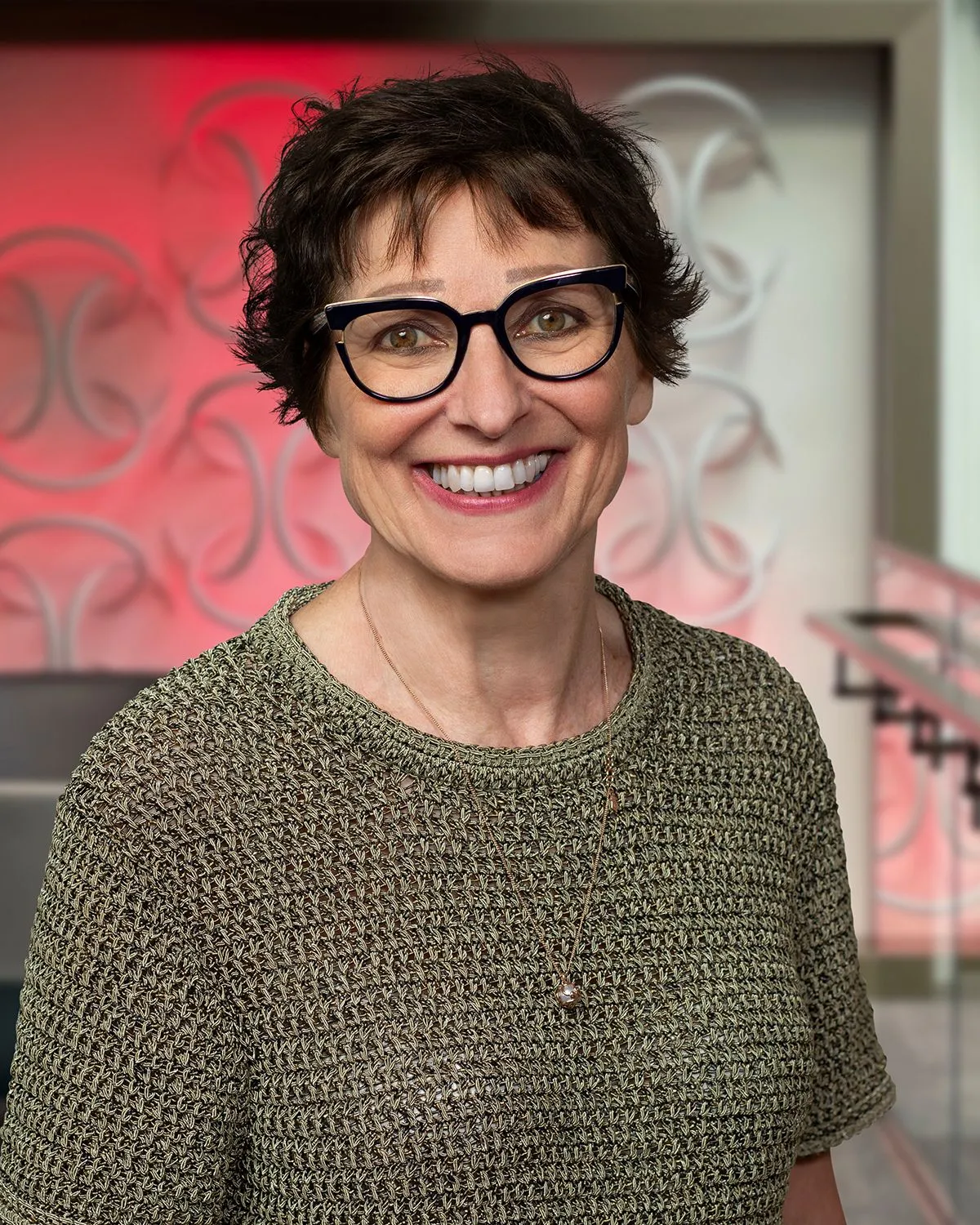
Gail Jaffa
Managing Partner, PSMG
PSMG introduces new range of member benefits
We have collaborated with some of our most important partners to offer a raft of new benefits and rewards to our membership. These are services essential to the marketing and business development professional to support the new skills needed for ourselves and our teams to prosper in an increasingly complex environment. They are provided by some of the best in their fields of expertise, knowledge and training. For further details click here.